

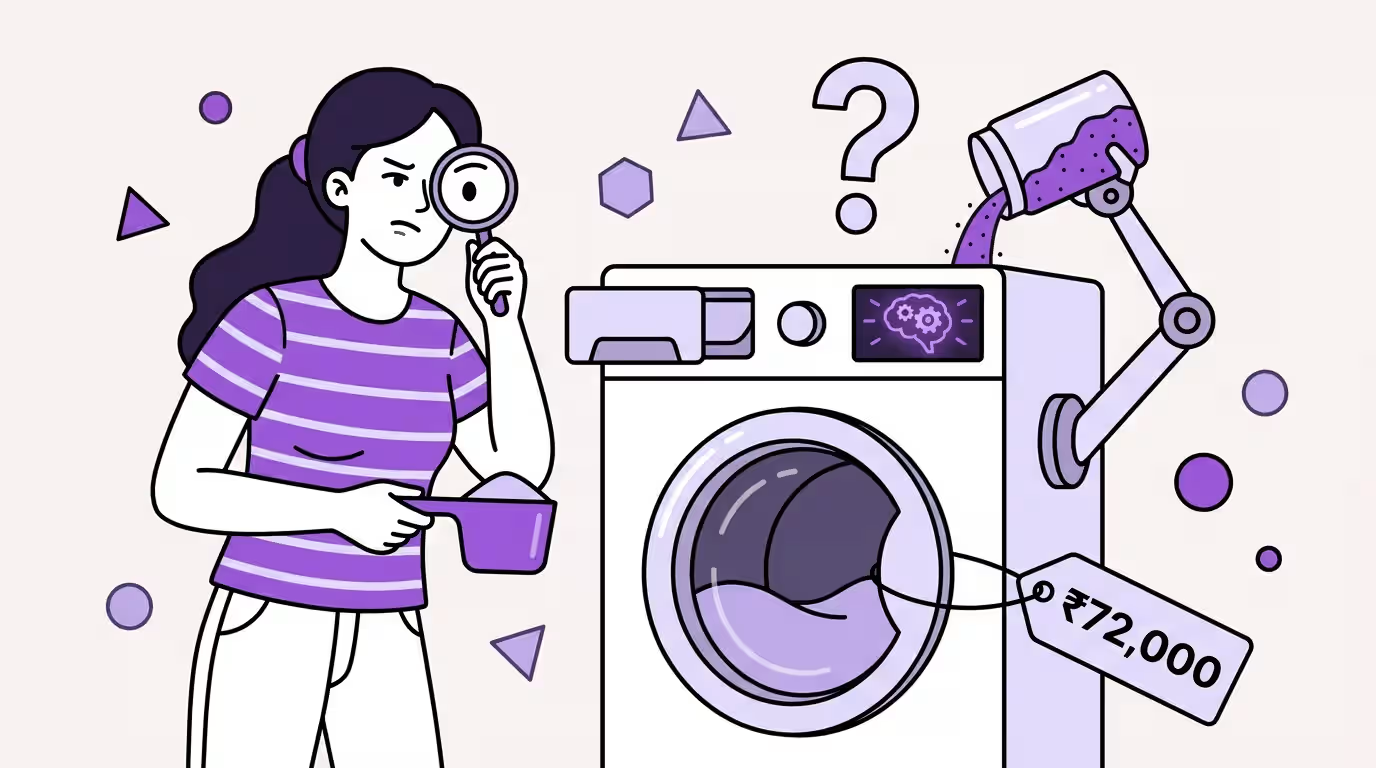
Your shiny new AI washing machine promises to think for you. But what if its brain is all marketing and no muscle?
IFB Industries just rolled out its flagship DeepClean® washing machine range with Ai DOS — a system that automatically dispenses the “perfect” amount of detergent every single time. The top-of-the-line 11 kg front-loader with Ai DOS carries an MRP of ₹72,290. Samsung, LG, Bosch, and Miele are all betting big on the same technology. The global smart washing machine market, valued at USD 12.02 billion in 2024, is projected to balloon to USD 43.63 billion by 2030. Sounds like the future. There’s just one inconvenient problem: independent lab tests suggest auto-dosing actually makes your clothes dirtier.
What the Labs Found
In October 2025, the UK’s Which? — one of the world’s most respected consumer testing bodies — put five auto-dosing washing machines through rigorous lab testing. The results were damning. Every machine received a lower star rating for overall washing performance when using auto dosing — in four out of five models, the star rating dropped by two stars out of five. Looking at individual stain performance, auto-dosing was poorer in 83% of cases, the same in 14%, and better in just 3%. Their conclusion? “Manually adding detergent before each wash led to more efficient stain removal and better rinsing overall.”
Separately, Australia’s CHOICE lab tested Miele’s TwinDos auto-dosing system and found that despite the large price difference between proprietary auto-dose detergent and regular supermarket powder, the third-party powder ever so slightly outperformed the premium product.
The Real Business Behind the Buzz
So why is every major brand racing to sell you a feature that underperforms manual dosing? Follow the money. Smart-connected washers are expanding at a 12.30% CAGR through 2030 in India alone — the fastest among all washing machine segments. Auto-dosing lets brands justify premium pricing in a market where basic wash technology has been commoditized for years.
IFB’s own financials reveal the pressure behind this push. The company reported a consolidated net profit of ₹23.94 crores for Q3 FY26, marking a sharp 52.86% quarter-on-quarter decline, even as Q3 FY26 revenue of ₹1,412.54 crores represented its strongest quarterly performance on record. Translation: IFB is selling more than ever but earning less on every sale. Gross profit margin fell to 4.62% from 7.42% — a dramatic 280 basis point sequential decline. AI-branded premium products like the Ai DOS range aren’t just innovation — they’re a margin recovery strategy.
A ₹72,000 Question for Indian Consumers
Here’s the context most reviewers skip. India’s washing machine market reached USD 3.39 billion in 2025, but growth is driven by consumers in Tier-II and Tier-III cities shifting from semi-automatic units toward fully automatic models — not ₹72,000 AI flagships. Considering the higher initial cost, auto-dosing machines are an investment whose benefits may only outweigh the expense in high-usage settings such as commercial laundries or large households.
None of this means AI in washing machines is worthless. Load sensing, cycle optimization, and energy management deliver real value. But the specific headline feature being marketed hardest — automatic detergent dosing — has now been independently tested and found wanting. The models sent to the Which? lab “struggled to achieve good results with the auto-dosing function.”
Before spending ₹72,000 on a machine that promises to outsmart your detergent scoop, maybe ask: outsmart it at what, exactly?
