

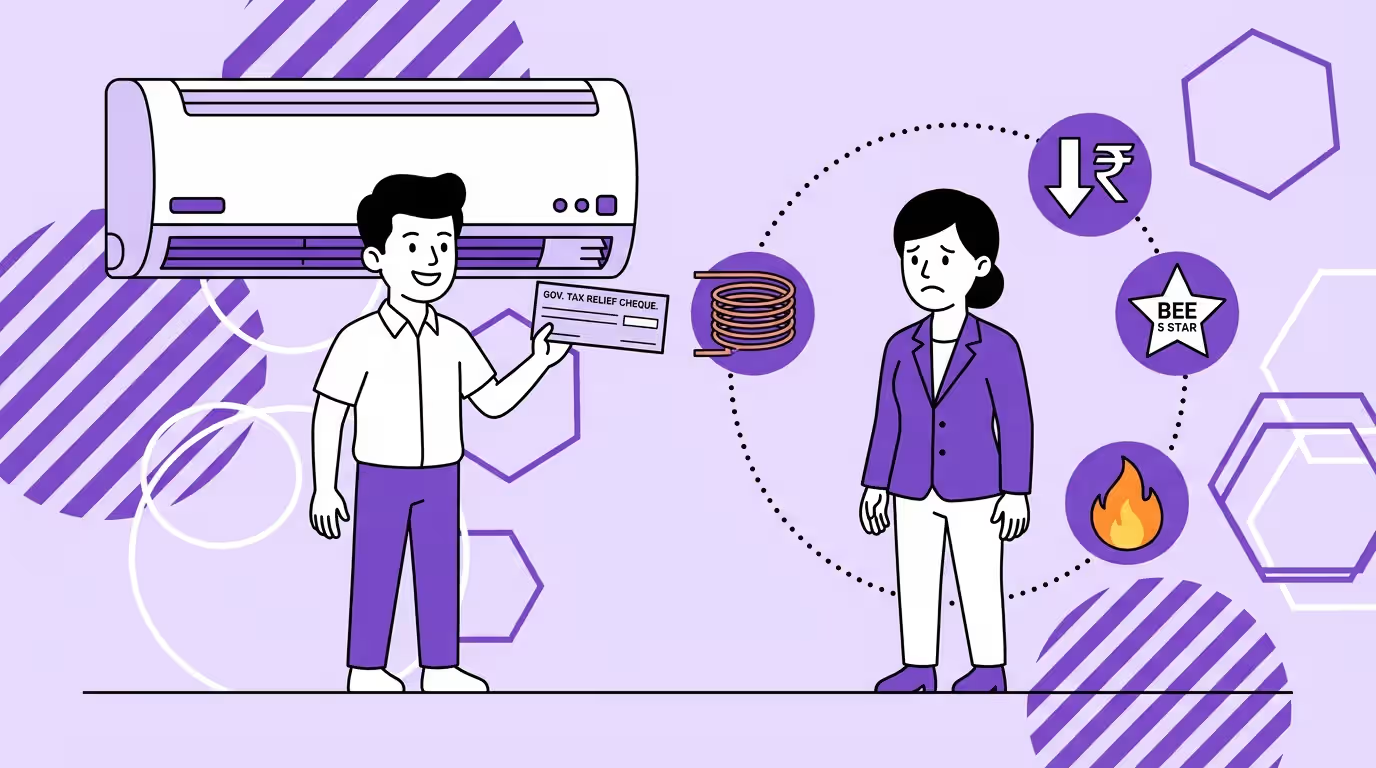
In September 2025, Finance Minister Nirmala Sitharaman stood before the cameras and announced something that made millions of middle-class Indians exhale: air conditioners would finally drop from the 28% GST slab to 18% Business Standard, a landmark relief under GST 2.0 — India’s biggest tax overhaul since 2017. Analysts projected savings of ₹3,500–₹4,500 per AC unit. Six months later, that relief is mathematically gone. All of it.
What Just Happened
In March 2026, India’s leading AC brands — LG, Daikin, Voltas, Blue Star, and Haier — announced price hikes of 5–15%, effective just before peak summer. LG specifically raised 5-star models by 9–10% and 3-star models by 7%, citing higher input costs for copper and aluminium, a weakening rupee, fresh energy-efficiency norms, and rising freight charges. Sanjay Chitkara, LG India’s Co-Chief Sales & Marketing Officer, confirmed the increases but argued that improved energy efficiency would help consumers save on electricity bills over time. What he didn’t say: the net cost to the consumer has already reset to pre-GST-cut levels — or worse.
The GST cut was real. The problem is that four independent forces converged simultaneously to swallow it whole.
1. Copper hit record highs. Copper prices surged past $12,000 per tonne on the LME — up 42% across 2025 — a raw material that sits at the heart of every AC unit’s condenser and refrigerant tubing. Manufacturers absorb this directly.
2. The rupee hit near-historic lows. The USD/INR rate crossed ₹91 Business Standard, making every dollar-denominated import — components, refrigerants, compressors — significantly more expensive. India’s currency lost roughly 5.5% against the dollar in 2025 alone, earning it the title of Asia’s worst-performing currency that year.
3. BEE’s 2026 star rating reset added mandatory compliance costs. The Bureau of Energy Efficiency implemented revised star rating standards on January 1, 2026, pushing AC prices up a further 5–10% across the board. PR Newswire The cruel irony: this hike effectively offset the consumer price advantage from the GST reforms of September 2025. PR Newswire A model you see labelled “3-star” today may well be the exact same unit that wore a “5-star” badge in 2025 — the benchmarks shifted, not the appliance.
4. A Middle East supply shock hit production. The least-reported factor: Qatar Energy’s force majeure at Ras Laffan — the world’s largest LNG liquefaction complex — combined with a Saudi Aramco shutdown drove Asian PNG/LPG spot prices up 65–75% since January 2026. LPG is what Indian factories use to braze the copper joints inside every AC unit. With India sourcing approximately 92% of its LPG imports from the Middle East, a war zone disruption translated, quite literally, into a production floor crisis.
LG quietly began adjusting its pricing structure back in October 2025 — a full five months before the March announcements. Dealers who anticipated the hike front-loaded their inventory at old prices, meaning many consumers have already been paying the higher cost without any official notification. The Finance Ministry had estimated the GST rate cuts could lead to a revenue loss of approximately ₹48,000 crore LG Global — a concession made in good faith. That concession has now been silently handed back to industry, not to the consumer.
There is also a wrinkle in the copper narrative worth noting. Goldman Sachs recorded a 600,000-tonne global copper surplus in 2025 — the largest absolute surplus since 2009. Prices are partly elevated by speculative US tariff-driven stockpiling, not genuine shortage. That means some of the input cost pressure being passed to you may partially unwind in the second half of 2026.
For now though, with India’s AC market projected to grow 15% this summer on heatwave demand, manufacturers have little incentive to hold back. The government gave. The market took back. Your cooling bill remains the same.
